Our proven methodologies for migrating your ERP and BI tools with complete peace of mind
Driven by digital transformation and competitive pressure, evolving your information system has become more necessary than ever in the face of accelerating new digital uses. New related projects (CRM, DMS, HR, WMS, etc.) are emerging, all revolving around the ERP system, the core engine of the company. The urgent need to evolve your enterprise management software arises because it remains the primary strategic asset for your growth.
Obsolescence of your system or infrastructure, non-compliance with regulatory changes in your industry, undercapacity in relation to your strong future growth, or unsuitability for the next 5/10 years in light of your strategy… These are all issues you must be able to address by consulting the vendor’s clear roadmap as well as customer feedback endorsing Microsoft or SAP solutions.

Discover the 4 key challenges involved in considering a change to your ERP or BI system
As part of this change initiative, whether you choose to migrate to the latest version of Microsoft Dynamics 365 for Finance & Operations (formerly AX 2009-2012), SAP S/4HANA (before SAP ECC6 support ends in 2027), or the latest SAP BusinessObject BI 4.3 server, it is essential to first understand all the new functional and technical features these versions offer as part of your maintenance.
As an expert partner for Microsoft and SAP solutions, we support you in taking a step back during this analysis and reflection phase to help you discover the full range of possibilities for your migration:
- Functional contributions must be considered for the creation of future value in your day-to-day business processes and to determine whether custom developments can be replaced in favor of new standard features or business accelerators, thanks to our industry solutions ADAX Suite and Cadexpress, for greater agility and competitiveness.
- The value of managing your data is a decisive factor in your project; ensuring your data is reliable and leveraging the new features available on technology platforms such as Microsoft or SAP make it possible to perform real-time analyses via In-Memory databases—going even further with Microsoft Power BI and SAP Analytics Cloud—or to cross-analyze them between your data warehouse and your ERP transactional data.
- Technological advances will determine your ability to transform by facilitating interactivity and the exchange of information both internally and externally, while benefiting from unparalleled levels of security in the Public or Private Cloud. Your migration planning must therefore begin quickly before the end of vendor support, as fixes for system “crashes” and security updates will no longer be maintained.
- The benefits of the Cloud raise the question of your technical architecture and your ability to more easily leverage the latest innovations such as IoT, Blockchain, RPA… A smooth migration with hybrid cloud architectures is entirely possible and enables you, beyond the technical and financial aspects, to constantly benefit from market developments.
Support your migration planning with a 5- to 10-day workshop to choose the right path for your company
Migrating to your new ERP or BI platform does not necessarily require creating a requirements specification, our Proof-of-Concept (POC) methodology was specifically designed to help you easily address the various migration paths.
In 5 to 10 days of workshops with your business and IT teams, create a complete project plan with an accurate estimate of the migration cost, as well as the benefits and priority areas for innovation made possible by the new Microsoft or SAP versions. This ensures you can start a migration project with all the useful information you need and minimal risk of regression.
STEP 1
Analysis of your existing environment in 3 phases
- Identification of business processes (organizational and functional)
- Application mapping
- SAP Business Scenario Recommendation and Microsoft Business Value Assessment tools
- Overview of your executive management and business units’ strategy
STEP 2
Assessment of the solution for tomorrow
- Inventory of the key factors shaping the upgrade project with the IT department
- Identification of areas for improvement with the business departments
- Comparative study of your existing environment with our business accelerators
STEP 3
Phase 1: Recommendations
- Proposal of solutions and migration implementation scenarios
- Assessment of financial aspects (project/licenses)
STEP 4
Phase 2: deliverables
- Drafting of the scoping study report: mapping, list of macro-processes
- Identification of priority areas for innovation on SAP Business Technology Platform and Microsoft Power Plaftorm
- Approach to the project methodology and deployment strategy
- The projected schedule
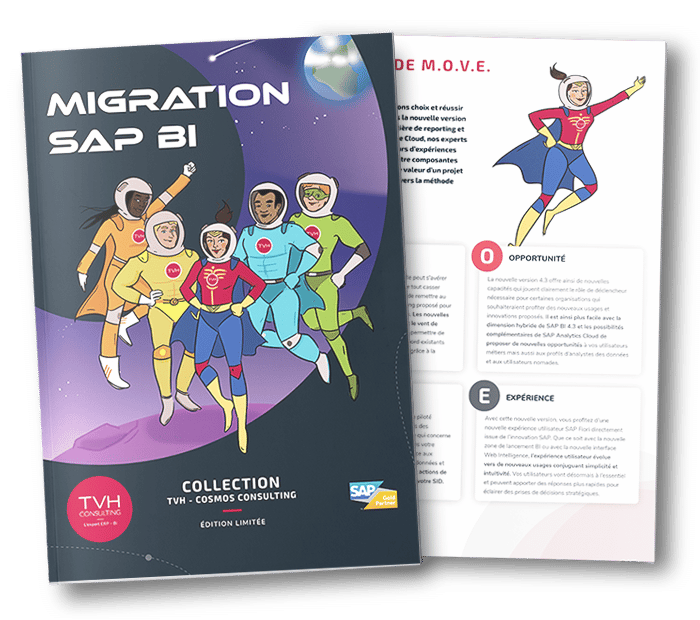
Discover the ERP or BI Migration Guide to Assess the Benefits and Risks
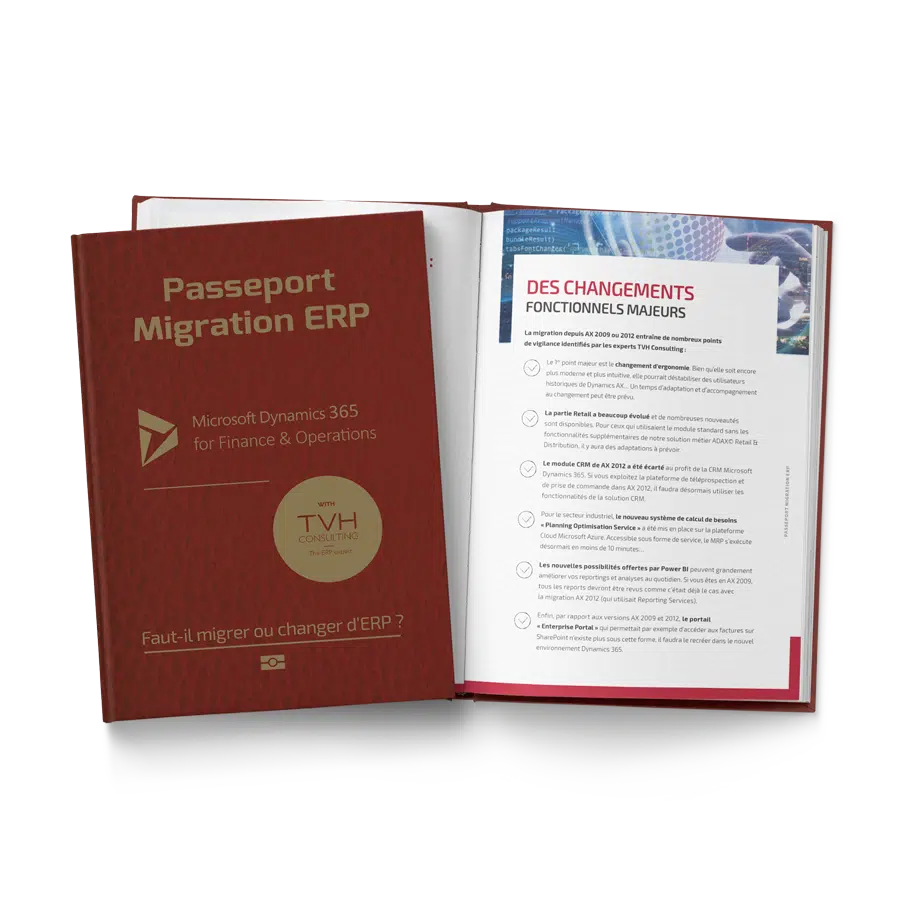
ERP Migration Passport Microsoft Dynamics 365
You are using an older version of Dynamics AX, such as AX 2012 R3, which has no longer been supported since January 10, 2023. Learn how to properly approach your migration to Dynamics 365. 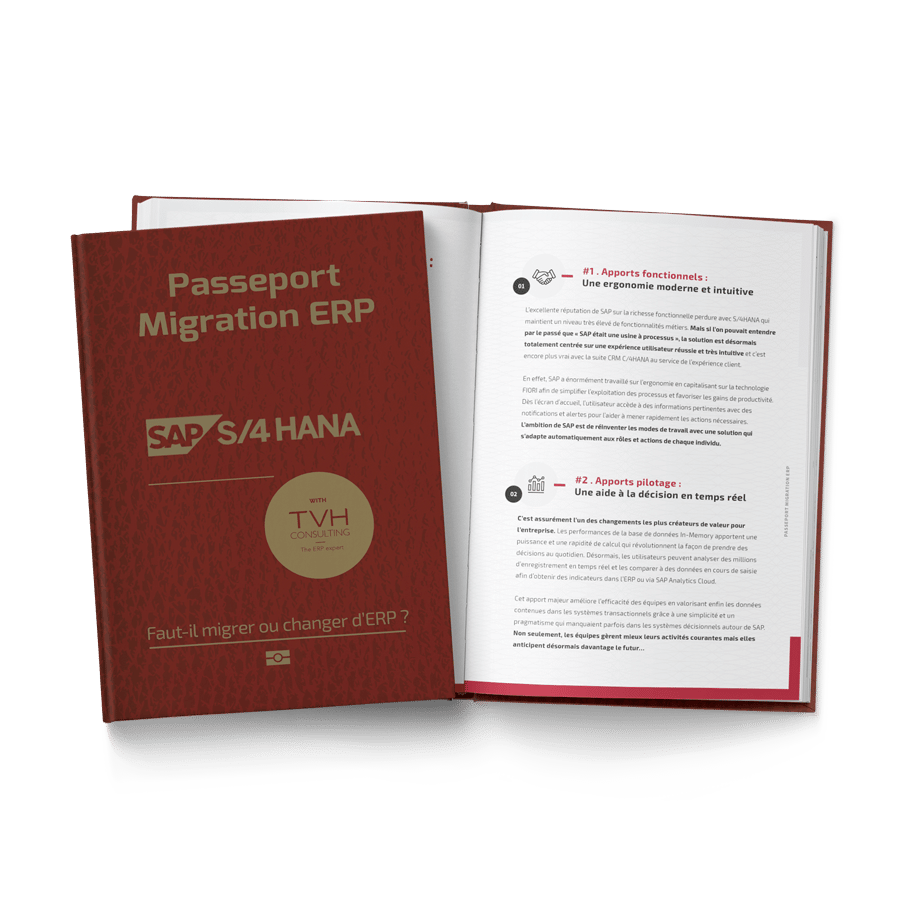
ERP Migration Passport SAP S/4HANA
Are you currently working on your migration plan from SAP ECC6 to SAP S/4HANA ahead of the 2027 deadline? Discover the different offerings and functional opportunities of the latest version.